Research Questions and Aims
Mapping the Plateau and its
Mapping the Plateau and its
Chora.
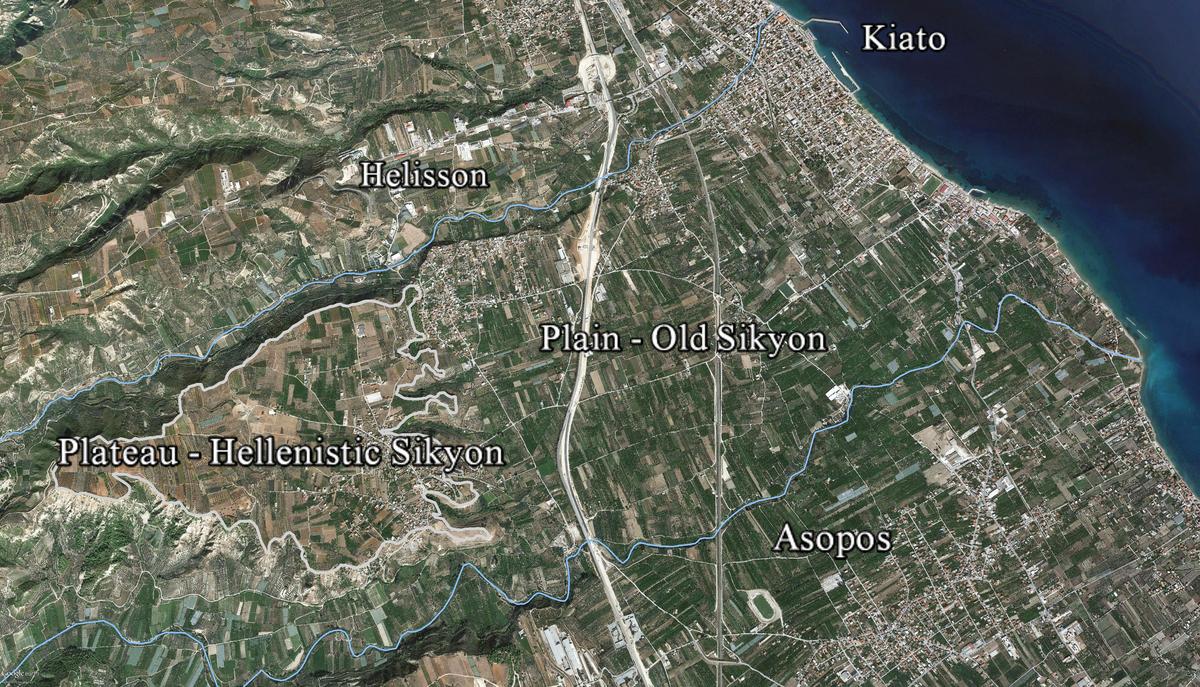
The project targets the Hellenistic plateau city and its immediate hinterland, measuring how the 303 BC refoundation reshaped urban form, land use, and movement between the Asopos and Helisson rivers.
We combine non-invasive survey, geoarchaeology, and targeted excavation to identify the plateau's urban fabric, production zones, and agricultural patterns connected to the plateau edge and surrounding chora.
Primary aims
- Map the plateau's street grid, blocks, and civic core.
- Locate production and industrial zones across the plateau.
- Test agricultural patterns linked to the plateau and chora.
Wider questions
- How did refoundation affect urban organization and defense?
- Can written sources be matched to archaeological evidence?
- What does Sikyon reveal about Hellenistic urbanism?
"How did the refoundation transform plateau settlement patterns, production, and the rural landscape?"